Work Request Automation
Work Request Automation in DreamzCMMS eliminates manual triage by letting you define rules that automatically act on incoming requests the moment they are created. Instead of reviewing every request individually, you set up an IF / AND / THEN workflow once — and the system handles routing, assignment, prioritisation, and escalation consistently in the background, every time.
Overview
Automation workflows are built using simple rule logic:
- IF — The trigger event (e.g., a Work Request is created)
- AND (optional) — Additional conditions that must also be true (e.g., Priority is High, Category is Electrical)
- THEN — The action to take automatically (e.g., Assign to a technician, Create a Work Order, Send a reminder email)
Once a workflow is saved and set to Active, it runs silently in the background and applies to every matching request — ensuring no request falls through the cracks and every one is triaged consistently, with a full audit trail.
Before You Begin
- You must have Admin or Manager permissions to create and manage automation workflows.
- The users, teams, locations, and assets you plan to reference in your rules must already exist in the system.
- Think through your triage logic before building — knowing your triggers, conditions, and intended actions will make setup much faster.
How to Create a Work Request Automation Workflow
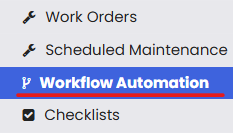
Step 1 – Navigate to Workflow Automation
From the left-side menu, select Workflow Automation. This opens the list of all existing automation rules.
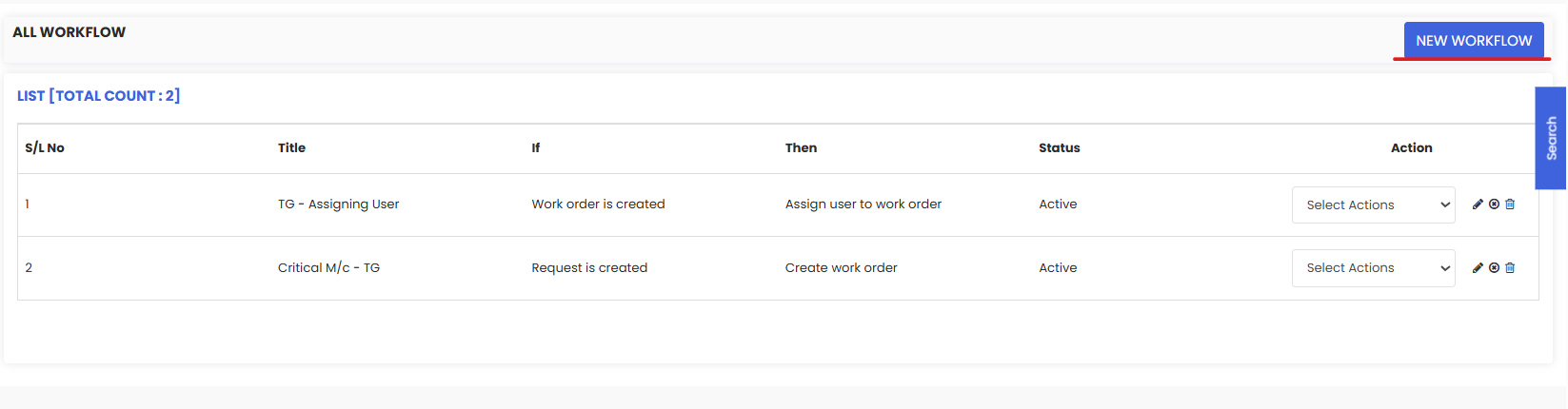
Step 2 – Click "New Workflow"
Click the New Workflow button to open the workflow creation form.
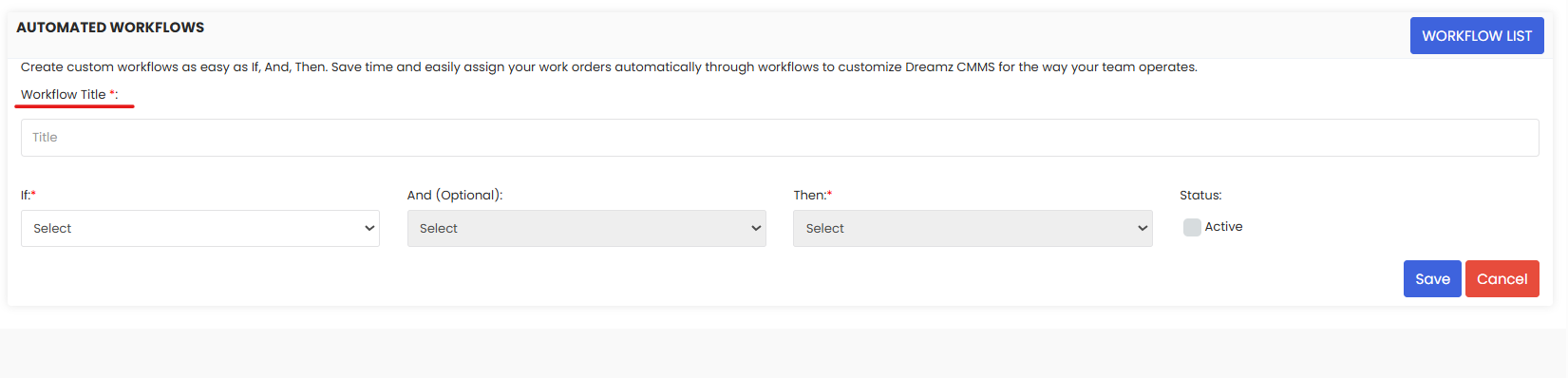
Step 3 – Enter a Workflow Title
In the title field, enter a clear and descriptive name for the automation rule (e.g., "Auto-assign High Priority Electrical Requests" or "Create Work Order on Request Submission"). A good title makes it easy to identify and manage rules as your list grows.
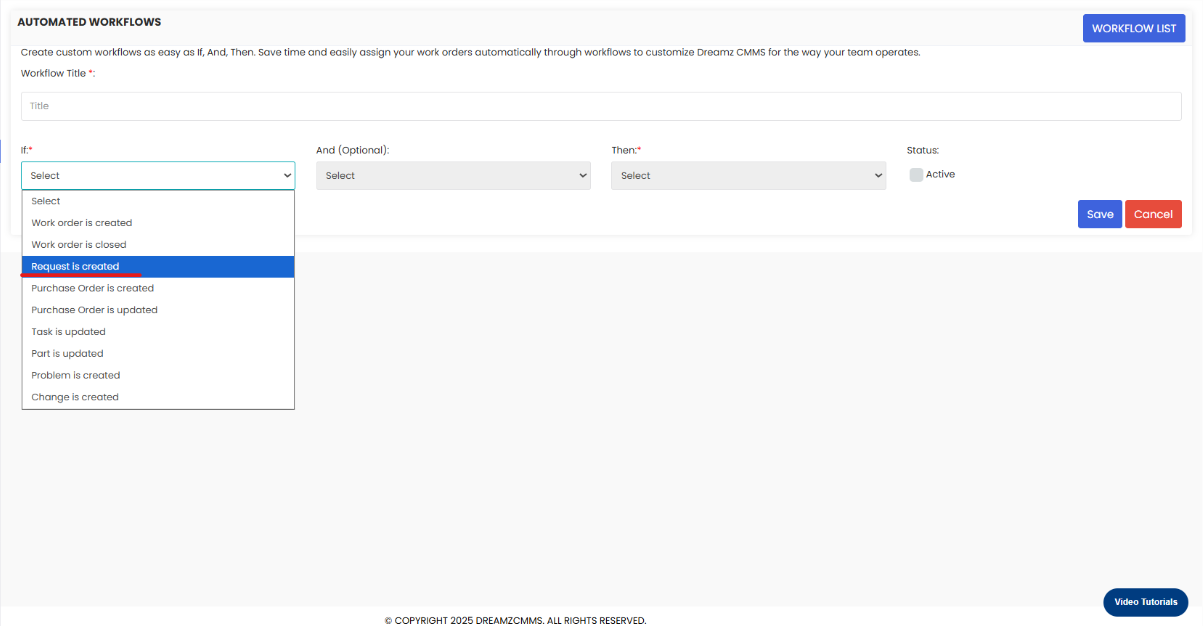
Step 4 – Set the Trigger (IF)
From the IF dropdown, select the event that will trigger this automation. For Work Request automation, select:
- Request is Created — Triggers the rule whenever a new Work Request is submitted.
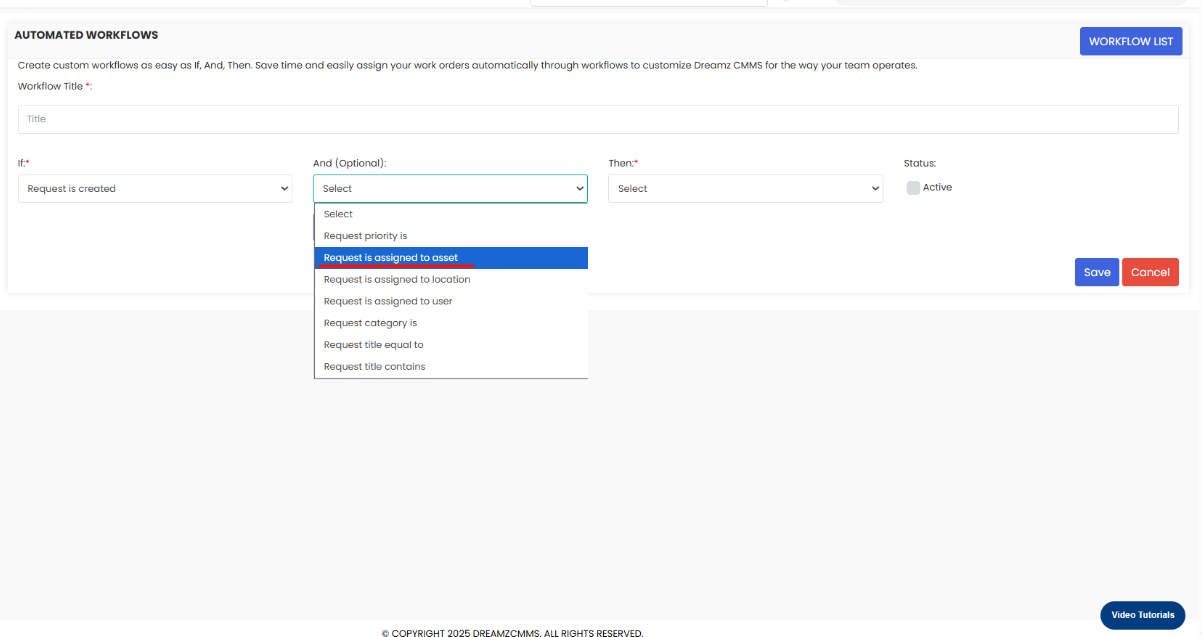
Step 5 – Add Conditions (AND) — Optional
Use the AND section to narrow down which requests this rule applies to. You can add one or more conditions, such as:
- Priority — e.g., only trigger if Priority is High or Critical
- Category — e.g., only trigger if Category is Electrical or HVAC
- Assigned Asset — e.g., only trigger for a specific asset
- Location — e.g., only trigger for requests from a specific facility
- Assigned User — e.g., only trigger if the request is assigned to a particular user or team
Tip: Leaving the AND section empty means the rule will apply to all new Work Requests, regardless of their details. Add conditions when you want more targeted, specific automation.
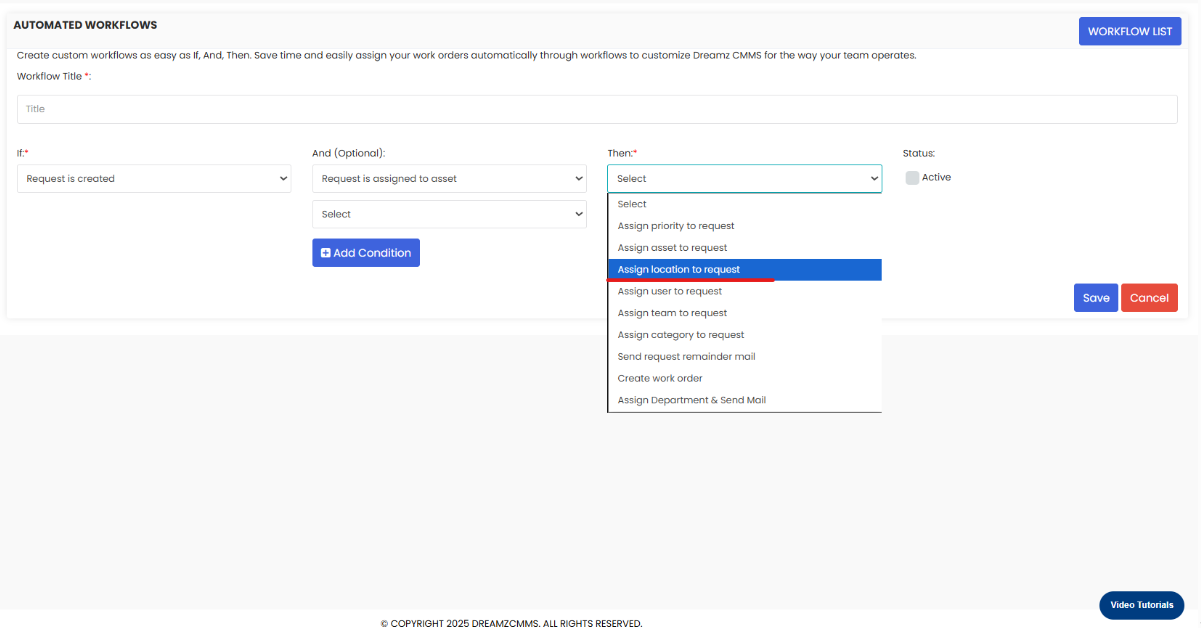
Step 6 – Define the Action (THEN)
From the THEN dropdown, select the action the system should take automatically when the trigger and conditions are met. Available actions include:
- Create Work Order — Automatically generate a Work Order from the request.
- Auto-assign User — Assign the request to a specific technician or user.
- Auto-assign Team — Route the request to a team or group.
- Auto-assign Location — Link the request to a specific facility or location.
- Auto-assign Asset — Associate the request with a specific asset.
- Set Priority — Override or set the priority level automatically.
- Set Category — Assign a category to the request.
- Send Reminder Email — Trigger an automated email notification to relevant parties.
Step 7 – Activate the Workflow
Check the Active checkbox to enable the workflow. If left unchecked, the rule will be saved but will not run.
Step 8 – Save the Workflow
Click Save to create the automation rule. It will now appear in the Workflow Automation list and will begin running automatically for all matching Work Requests.
Example Workflow
Here is an example of a common automation setup:
| Section | Value |
| Title | Auto-create Work Order for All New Requests |
| IF | Request is Created |
| AND | (none — applies to all requests) |
| THEN | Create Work Order |
| Active | ✅ Enabled |
Result: Every time a new Work Request is submitted, a Work Order is automatically created — removing the need for a manager to manually convert each request.
After Setting Up Automation — What's Next?
With your automation workflows active, you can:
- Monitor incoming Work Requests to verify automation is firing correctly — see Manage Work Requests
- Review auto-created Work Orders to confirm they are populated correctly and assign any additional details — see Create and Manage Work Orders
- Add more workflows to cover different request types, priorities, or departments.
- Edit or disable workflows from the Workflow Automation list at any time as your processes evolve.
Tips for Managing Automation Workflows
- Start simple. Begin with a broad rule (e.g., create a Work Order for all new requests) and layer in more specific rules over time as you understand your request patterns.
- Use descriptive titles. With multiple workflows running, clear names like "High Priority – Auto-assign to Senior Technician" are much easier to manage than generic ones.
- Test your rules after saving. Submit a test Work Request that matches your conditions and verify the expected action occurs.
- Use conditions to avoid over-triggering. A rule that applies to every single request can create noise. Use AND conditions to target only the requests that genuinely need automation.
- Review workflows periodically. As teams, assets, and processes change, outdated automation rules can cause incorrect assignments or unnecessary Work Orders.
- Deactivate instead of deleting. If a rule is no longer needed, uncheck the Active checkbox rather than deleting it — this preserves the rule in case you need it again.
Frequently Asked Questions
Can I create more than one automation workflow?
Yes. You can create as many workflows as needed, each targeting different request types, priorities, or locations.
What happens if a Work Request matches multiple workflows?
All matching workflows will trigger. Design your conditions carefully to avoid conflicting or duplicate actions (e.g., two rules that both auto-assign to different technicians).
Can I edit an automation workflow after saving it?
Yes. From the Workflow Automation list, click the Edit icon on any rule to update its title, conditions, actions, or active status.
Can I disable a workflow without deleting it?
Yes. Uncheck the Active checkbox on the workflow (via edit) to pause it without losing the configuration.
Does automation apply to Work Requests created before the workflow was set up?
No. Automation rules only apply to new Work Requests created after the workflow is saved and activated. Existing requests are not affected retroactively.
Will I see a record of which automations have fired?
Yes. DreamzCMMS maintains a full audit trail so you can track which rules were triggered and what actions were taken on each request.
Can I use automation to send notifications?
Yes. The Send Reminder Email action can be used to automatically notify technicians, managers, or requesters when specific conditions are met.