Quotation Fields Configuration
Quotation Fields Configuration gives administrators full control over what appears on the quotation (estimate) form and how the quotation list is displayed. By setting each field as Required, Optional, or Hidden, you enforce data quality and ensure every quotation captures the cost breakdown your organisation needs. The companion Quotation Columns Configuration lets you choose which columns appear in the quotation list view and in what order — giving your team a focused, workflow-ready interface.
Overview
The Quotation Configuration has two distinct areas:
- Quotation Fields Configuration — Controls which fields appear on the quotation form when creating or editing a quotation, and whether each field is mandatory, visible but optional, or hidden entirely.
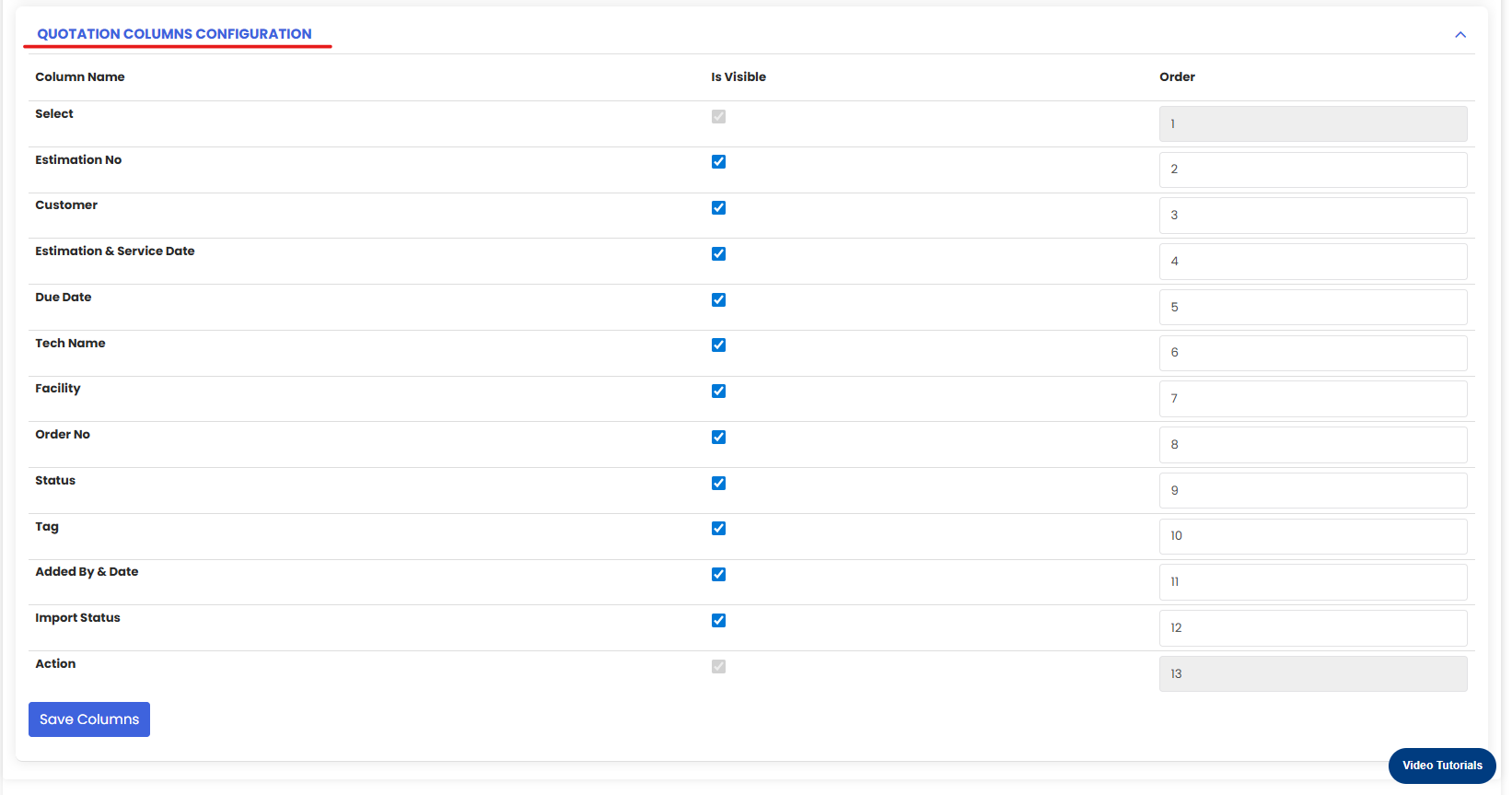
- Quotation Columns Configuration — Controls which columns are displayed in the Quotation list view and the order in which they appear.
Both are managed from the same Quotation Configuration tab inside System Configuration.
Before You Begin
- You must have Admin permissions to access and modify Quotation Fields Configuration.
- Review your quotation workflow and cost breakdown requirements before making changes — fields marked as Required will block submission if left empty.
- If you use Custom Fields, ensure they are labelled correctly before enforcing them here.
- Changes apply immediately after saving and affect all users across the system.
How to Configure Quotation Fields and Columns
Step 1 – Navigate to System Configuration
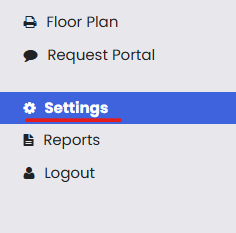
From the main menu, click Settings. Under the Configuration section, click System Configuration.
Step 2 – Open the Quotation Configuration Tab
On the System Configuration page, click the Quotation Configuration tab. This tab contains both the field settings and the column settings.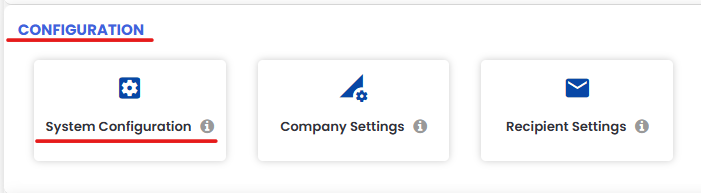
Step 3 – Configure the Form Fields
In the Quotation Fields Configuration section, review each field and set it to the appropriate state:
- Required — if the field must be completed before saving
- Optional — if the field should be visible but not mandatory
- Hidden — if the field should not appear on the form at all
Work through all relevant fields, including any Custom Fields your organisation uses.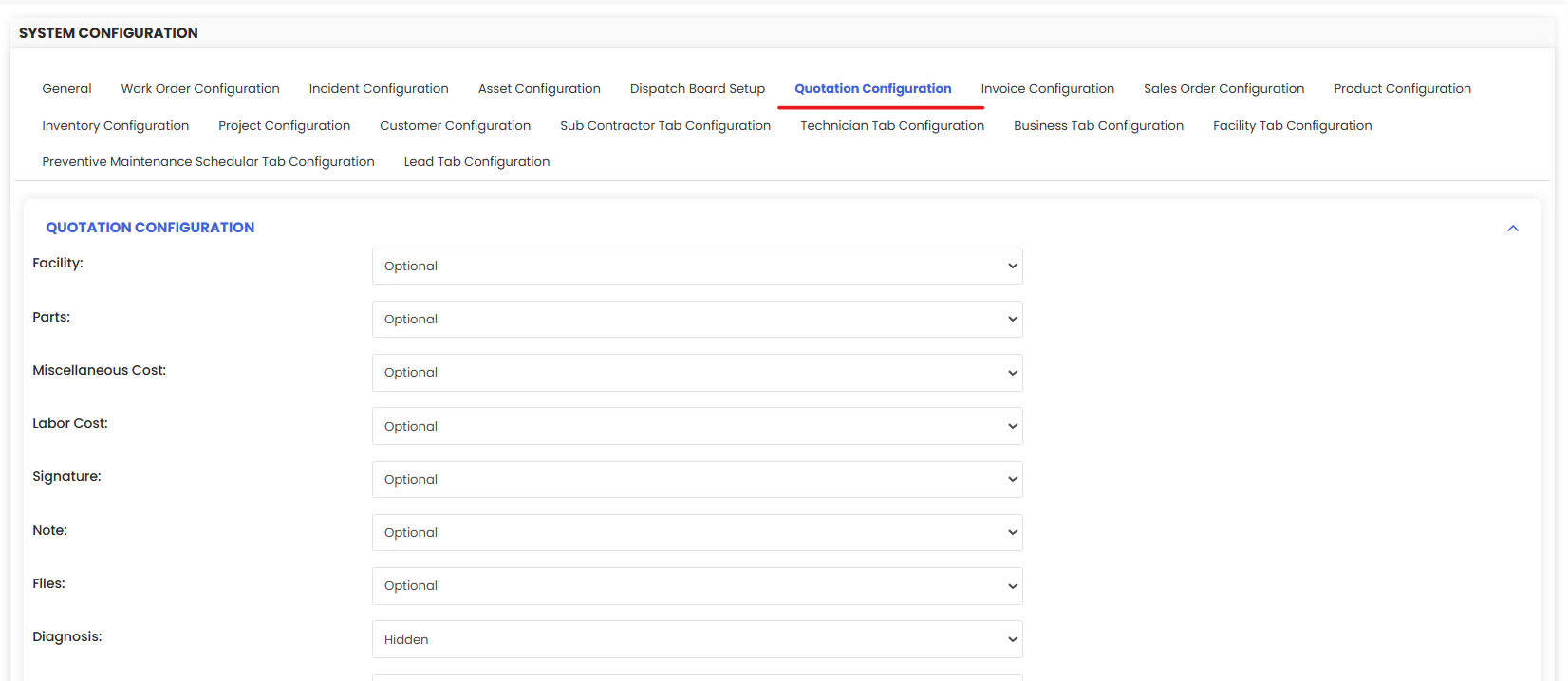
Step 4 – Configure the List Columns
In the Quotation Columns Configuration section, select which columns you want to display in the Quotation list view. Set the display order so the most important columns appear first for your team.
Step 5 – Save Your Configuration
Once you have configured both sections to your requirements, click Save. Changes take effect immediately across all platforms.
Important: Changes apply immediately after saving. All users will see the updated quotation form and list view straight away. Communicate significant changes to your team before saving.
Recommended Configurations
Standard Service Quotation
For organisations quoting labour and parts for maintenance work:
- Required: Facility, Parts, Labor Cost, Diagnosis
- Optional: Misc. Cost, Note, Files, Signature
- Hidden: (unused Custom Fields)
Customer-Facing Quotation with Approval
For quotations that require customer sign-off before work begins:
- Required: Facility, Parts, Labor Cost, Misc. Cost, Signature, Diagnosis
- Optional: Note, Files
- Hidden: (unused Custom Fields)
Internal Estimate (No Customer Sign-off)
For internal cost estimates where a signature is not needed:
- Required: Facility, Labor Cost, Parts
- Optional: Misc. Cost, Note, Files, Diagnosis
- Hidden: Signature, (unused Custom Fields)
After Configuring — What's Next?
With your quotation fields and columns configured, you can:
- Create and manage quotations with the streamlined, correctly enforced form
- Convert a Work Request to a Quotation to begin the approval process for a reported issue
- Configure Work Order fields to apply the same level of control to your Work Order forms
Tips for Configuring Quotation Fields
- Only require what is essential. Overly strict required fields can slow down quotation creation, especially for quick internal estimates. Strike the right balance for your team.
- Always require cost fields for external quotations. If quotations are sent to customers for approval, ensure Parts, Labor Cost, and Misc. Cost are all Required to avoid incomplete estimates reaching customers.
- Use the Signature field for formal approvals. If your workflow requires customer or manager sign-off before work begins, set Signature to Required to enforce this at the form level.
- Customise list columns for your team's workflow. The quotation list is often the first screen your team sees — surface the columns most useful for quick decision-making (e.g., Status, Due Date, Tech Name).
- Label Custom Fields clearly before marking them Required, so users know exactly what information to enter.
Frequently Asked Questions
Who can change the Quotation Fields Configuration?
Only users with Admin permissions can access System Configuration and modify quotation field or column settings.
Do changes apply immediately after saving?
Yes. All changes take effect immediately across the quotation form and list view for all users.
Will hiding a field delete existing data in that field?
No. Setting a field to Hidden removes it from the form going forward, but does not affect any data already saved in that field.
Can I make Custom Fields required on the quotation form?
Yes. Custom Fields can be set to Required, Optional, or Hidden just like standard fields. Ensure they are clearly labelled before making them mandatory.
Does the Columns Configuration affect printed or exported quotations?
No. The Columns Configuration only affects the list view within DreamzCMMS. Printed and exported quotation documents have their own layout settings.
Can I reorder the columns in the list view?
Yes. The Quotation Columns Configuration allows you to set the display order of columns so that the most relevant information appears first.
Does this configuration apply to quotations created from Work Requests as well?
Yes. The field and column configuration applies globally to all quotations in the system, regardless of how they were created.
Related Articles