Return Spare Parts
Returning spare parts is the process of putting previously issued inventory back into stock — for example, when parts were not used, were returned from a job, or were incorrectly issued. Proper returns keep your inventory levels accurate and ensure your team has a clear picture of available stock for future maintenance planning.
Overview
In inventory and maintenance workflows, spare parts are often issued to technicians or jobs based on anticipated needs. When those parts are not consumed or are found unsuitable, returning them to inventory corrects stock counts, prevents unnecessary reordering, and maintains data integrity across work orders and reports. Accurate return procedures help prevent stock discrepancies and ensure parts availability when needed.
Here is a reference video:
Before You Begin
Confirm that the part you want to return is already listed in your inventory.
Verify the quantity you plan to return so the system can update available stock correctly.
Know whether the return applies to a specific work order or is a general stock return.
Have access permissions for inventory adjustments or returns in the system.
How to Return Spare Parts
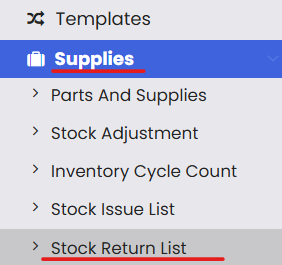
Step 1 — Open Inventory or Work Order
Navigate to either the inventory module (Supplies). Returning from the work order helps link the return directly to that job.
Step 2 — Locate Issued Parts
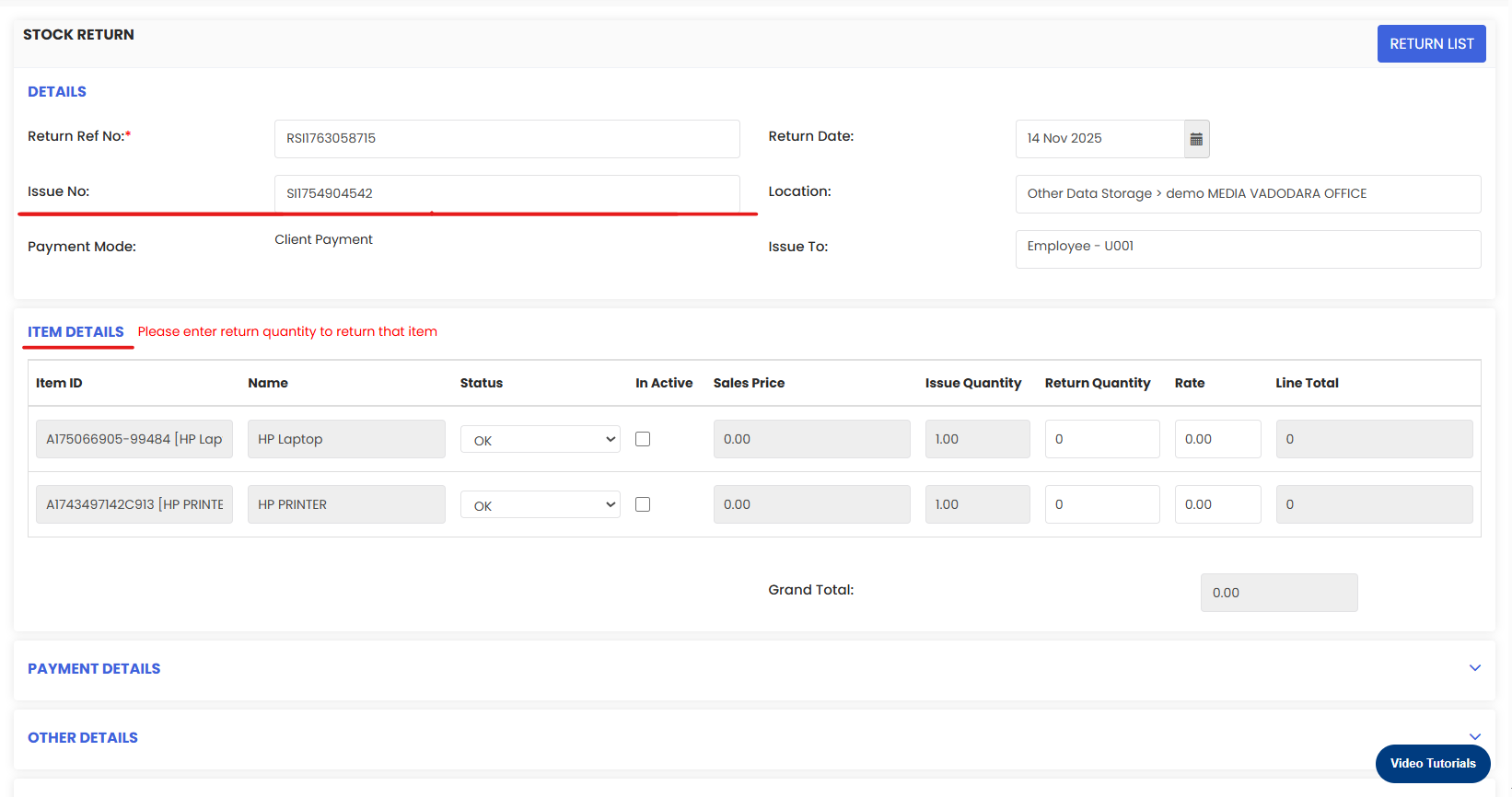
Find the section showing parts previously issued:
If in the work order, look for the Supplies list.
If from an inventory screen, enter a return or adjustment area

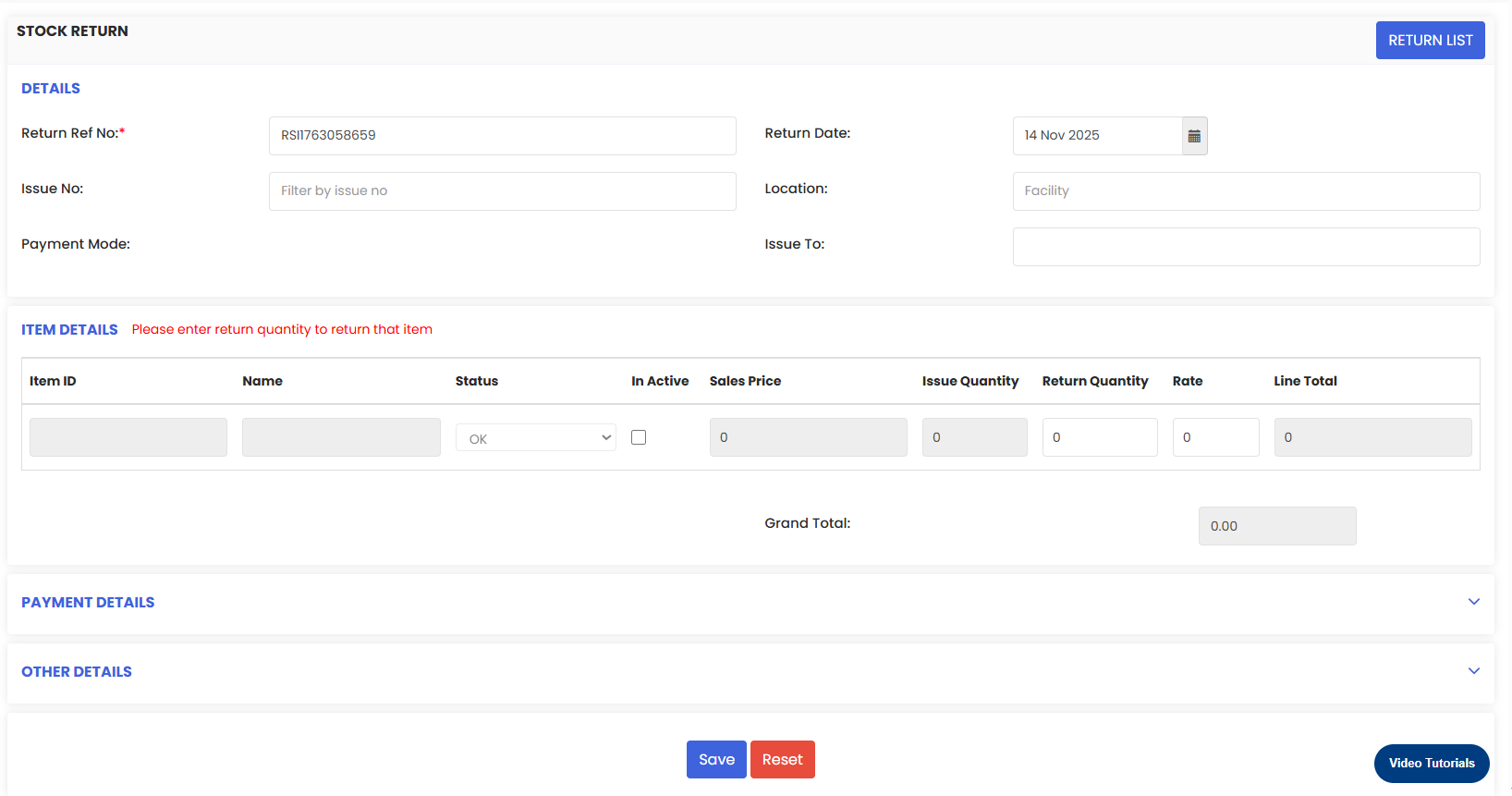
Step 3 — Initiate the Return
Select the part to return.
Enter the quantity you want to return.
Optionally provide a reason or note (e.g., unused, incorrect issue, damaged).
Recording a reason helps with audit trails and future inventory analysis.
Step 4 — Confirm and Save
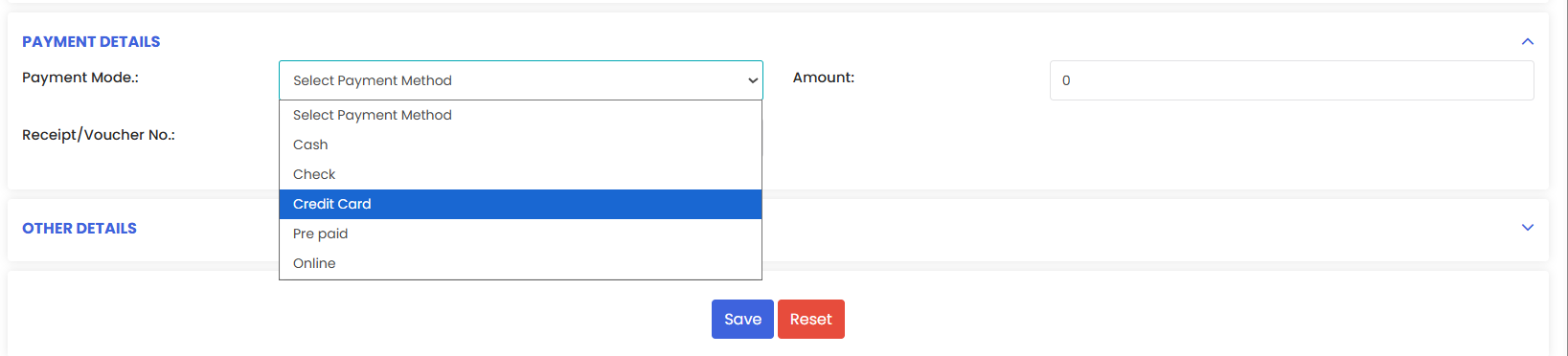
After entering the return details:
Click Save / Return / Confirm (depending on your system’s label).
The quantity is added back into inventory, and any linked work order records are updated to reflect the return.
Step 5 — Review Inventory Levels
Once returned, the system should now show the updated stock quantity for the item. You can:
View updated counts in the Inventory List.
Check transaction history to confirm the return was logged properly.
Use reports to monitor return patterns for planning or audit purposes
After Returning Parts
Returned parts are available for future use in maintenance jobs or reorder calculations.
Inventory reports and dashboards will reflect the updated quantities.
Any linked work orders will show that the parts were returned rather than consumed.
Audit trails help you understand why stock counts changed and who processed the return.
Tips for Effective Spare Part Returns
Document return reasons so stakeholders know why inventory was adjusted.
Train technicians to return parts promptly rather than holding unused stock.
Always verify quantities physically before returning to avoid creating further discrepancies.
Review return logs regularly to identify patterns (e.g., frequently returned items might signal ordering or issuance issues).
Frequently Asked Questions (FAQs)
1. Why should I return spare parts to inventory?
Returning spare parts keeps inventory levels accurate, prevents unnecessary reordering, and ensures the right parts are available for future work without stock inconsistencies.
2. Can I return parts from a completed work order?
Yes — even if a work order is closed, you can typically return unused parts so the inventory reflects the correct on-hand quantity.
3. Does returning parts affect inventory reports?
Yes — once returned and saved, inventory reports and dashboards are updated to show the adjusted stock quantities.
4. Should a return always include a reason?
Including a clear return reason is best practice because it supports audit trails, helps diagnose recurring issues, and informs procurement and issuance decisions going forward.
Related Articles
- Import Asset Locations
- How to Add BOM to a Facility/Location
- How to Assign Personnel to a Location/Facility
- Create and Manage Work Orders